 El Nido Island Hopping Tours
Best Time to Visit El Nido: Month-by-Month Guide
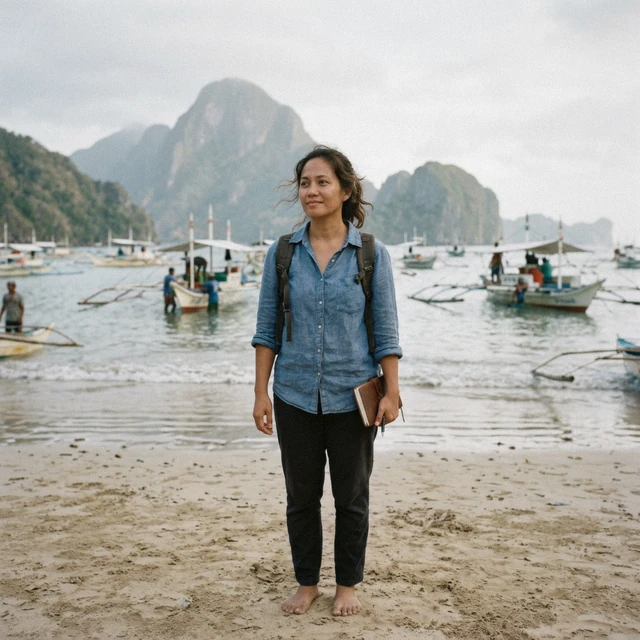
The best time to visit El Nido is December to April, the dry amihan months, with March and April giving the flattest water of the year. November and May are the shoulder weeks worth knowing about: boats still run most days and the lagoons are noticeably emptier. Avoid late July through September if a specific boat route matters to you, because that is when the wind, not the rain, starts closing crossings.
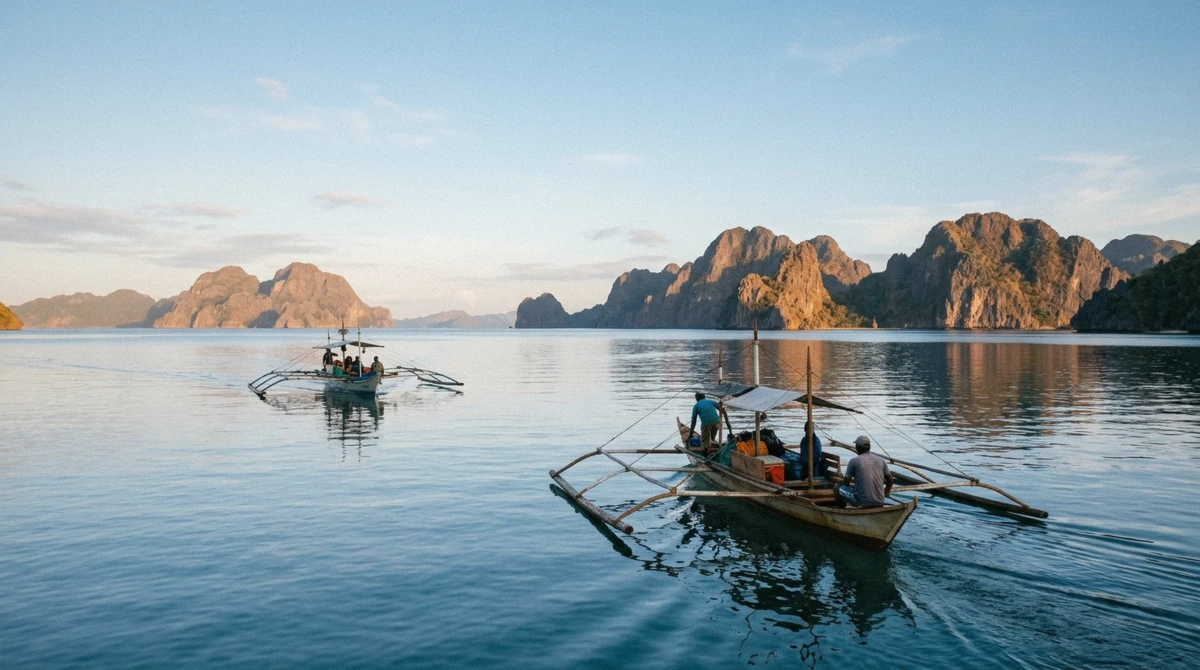
Quick answer
December to April is the best time to visit El Nido: rainfall drops to 20 to 40 millimetres a month between January and April, the sea flattens, and every boat route runs. March and April are the calmest and the hottest, around 33°C. June to October brings 230 to 285 millimetres a month and the wind that cancels tours.
Key takeaways
- Calmest water: March and April, when the open crossing on Tour C is at its most reliable
- Quietest with good weather: late November and May, the shoulder windows either side of peak
- Busiest: Christmas to New Year and Holy Week, when boats sell out days ahead and prices firm up
- Wettest: July through September, 260 to 285 mm a month, and the months tours get called off
- Sea temperature holds 28 to 30°C all year, so no wetsuit on any island hopping route
- Whatever the month, keep a spare day: a cancelled boat only hurts if you are leaving tomorrow
Seasons at a Glance
Four Windows, and What Each One Costs You
Rainfall figures are monthly averages for El Nido and the surrounding Bacuit coast. Last verified August 2026. Temperatures barely move all year: daytime highs sit between 30 and 33°C every single month, which is why nobody plans a Palawan trip around the thermometer.
| Season | Rain | Sea state | Crowds | Verdict |
|---|---|---|---|---|
| December to February (amihan) | 30-90 mm a month | Calm, occasional northeast wind chop | Peak over the holidays, steady after | Best overall |
| March to April | 25-40 mm a month | Flattest of the year | High, and Holy Week is the peak | Best water, book early |
| May and late November | 120-160 mm a month | Mostly calm, building either way | Noticeably lighter | Best value |
| June to October (habagat) | 230-285 mm a month | Swell across the open strait | Lightest of the year | Cheapest, and the least reliable |
Month by Month: Rain, Heat and What It Means
Monthly rainfall and temperature averages for El Nido, last verified August 2026. The temperature column is the least useful one on this table: it moves by three degrees across the whole year. Rain and wind are what change your day.
| Month | Rain | Daytime high | On the water |
|---|---|---|---|
| January | 30 mm | 30°C | Dry, breezy, every route open |
| February | 20 mm | 31°C | Driest month, best all-round conditions |
| March | 25 mm | 32°C | Flat sea, Holy Week crowds possible |
| April | 40 mm | 33°C | Calmest water, hottest air |
| May | 120 mm | 33°C | Shoulder: quiet, first monsoon showers |
| June | 230 mm | 32°C | Habagat arrives, open crossing starts closing |
| July | 280 mm | 31°C | Wettest stretch begins |
| August | 285 mm | 31°C | Peak rain, fewest boats |
| September | 260 mm | 31°C | Still wet, cheapest month in town |
| October | 250 mm | 31°C | Rain easing late in the month |
| November | 160 mm | 31°C | Shoulder: amihan sets in, quiet lagoons |
| December | 90 mm | 30°C | Dry by mid-month, holiday crush at the end |
December to February: The Reliable Window
What the Amihan Does
The northeast monsoon, the amihan, sets in from late November and holds through February. It brings dry air, clear mornings and a breeze off the mainland side, which is why this is the window everybody books.
Rainfall runs 30 to 90 millimetres a month, most of it in December as the last of the wet season clears. January and February are the driest months of the year alongside March. Daytime highs sit at 30 to 31°C, and the amihan breeze makes those the most comfortable weeks on a boat.
The one caveat is that a strong amihan can push chop across the northern bay for a day or two at a time. It rarely cancels anything, but it can make an eight-hour day on a bangka less pleasant than the forecast suggested.
The Holiday Crush
Christmas through the first week of January is the single busiest period in El Nido. Filipino families travel, international arrivals peak, accommodation prices climb and the morning boats on the popular routes sell out three or four days ahead.
If your dates fall there, book the boat before you book dinner. The four lettered routes all run on the same clock, and the queues at the Secret Lagoon and Hidden Beach are at their worst in that fortnight.
Mid-January to the end of February is the sweet spot inside this season: the same weather, without the holiday load.
March and April: The Calmest Water
Flat Sea, Hot Air
March and April give the most settled water of the year. The amihan eases, the habagat has not arrived, and Bacuit Bay spends weeks looking like the photographs. If you care about the open crossing to Matinloc Island, this is when to come.
It is also the hottest stretch, with highs around 33°C and very little wind to take the edge off. On a bangka with a tarp roof that matters more than it sounds: bring more water than you think, and use the shade at the stern between stops.
Rainfall is at its annual low, 25 to 40 millimetres a month. Visibility for snorkelling is at its best because there is almost no run-off coming off the islands.
Holy Week
Holy Week, the week before Easter, is the second crowd peak of the year and it moves with the calendar, falling in March or April. Domestic travel spikes, boats fill, and accommodation in town books out well in advance.
It is a good time to be in the Philippines and a difficult time to be in a place with four boat routes and one town beach. If your trip has flexibility, take the fortnight after it instead: same water, half the boats.
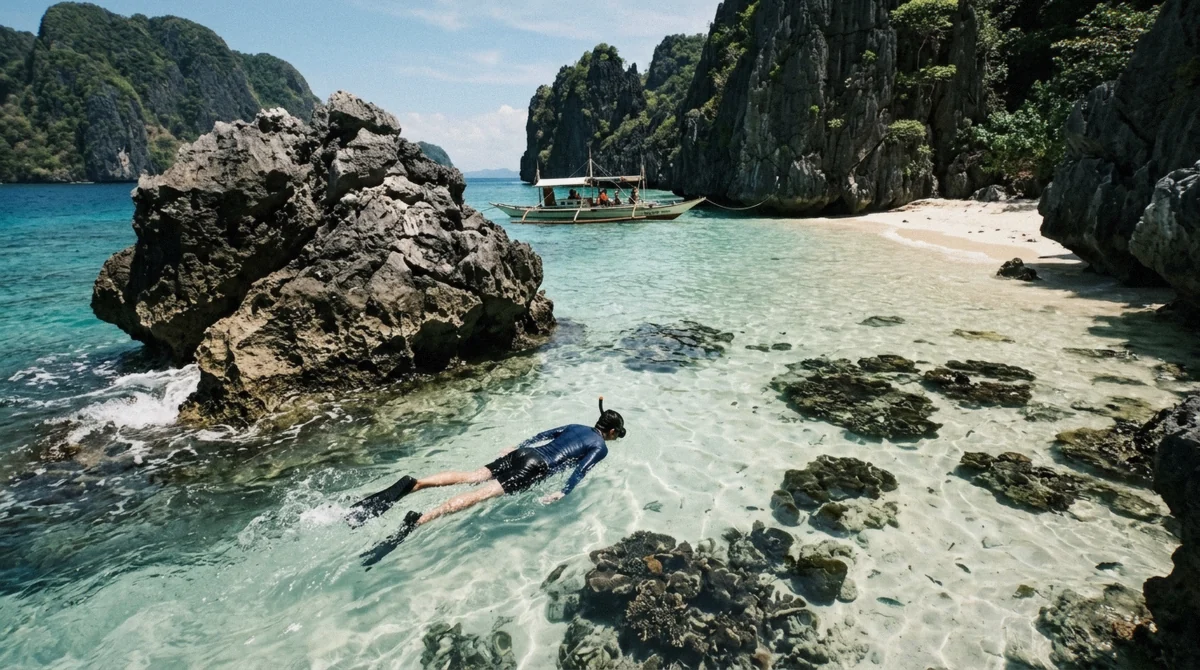
June to October: The Habagat
It Is the Wind That Stops You, Not the Rain
This is the part most season guides get wrong. Rainfall in the southwest monsoon is heavy, 230 to 285 millimetres a month from June through October, but tropical rain arrives in bursts and passes. A wet morning does not cancel a boat.
Wind does. The habagat blows from the southwest, straight into the open Tapiutan Strait, and that is the water Tour C has to cross to reach Helicopter Island and the Matinloc beaches. When the harbour master closes the strait, Tour C is off and the other three routes still run, because they work the sheltered eastern and northern halves of the bay.
So a monsoon trip is not a washout, it is a narrower menu. Tour B and Tour D go out on days Tour C cannot, and the lagoons on Tour A stay accessible through almost all of it.
What You Get in Exchange
Fewer boats, softer prices and lagoons you can photograph without twelve other bangkas in the frame. Operators negotiate in the wet months in a way they simply do not in February. Accommodation costs less and you can walk in the evening before rather than booking three days ahead.
Snorkelling visibility is the real casualty. Heavy rain pushes run-off off the islands and the water goes from glass to green for a day or two afterwards. Give it a morning to settle rather than writing the day off.
Typhoon risk exists but Palawan sits south of the track most storms take. The practical effect is usually a couple of rough days rather than a destroyed trip, and operators cancel rather than sail into it.
Best Season by Traveller
If You have one shot and want everything to run
March or April. Flattest water of the year and every route open, at the cost of heat and crowds.
If You are photographing the lagoons
Late November or May. Good light, calm mornings, and the fleet thinned out enough to get a clean frame.
If You are travelling with children
January or February. Comfortable air, short sheltered routes running daily, and no Holy Week crush.
If Budget is the constraint
June to October. Cheaper rooms, negotiable tours, and three of the four routes running most days.
If You only have two days in town
Any dry-season month, and book the Tour C route on the calmer of your two mornings.
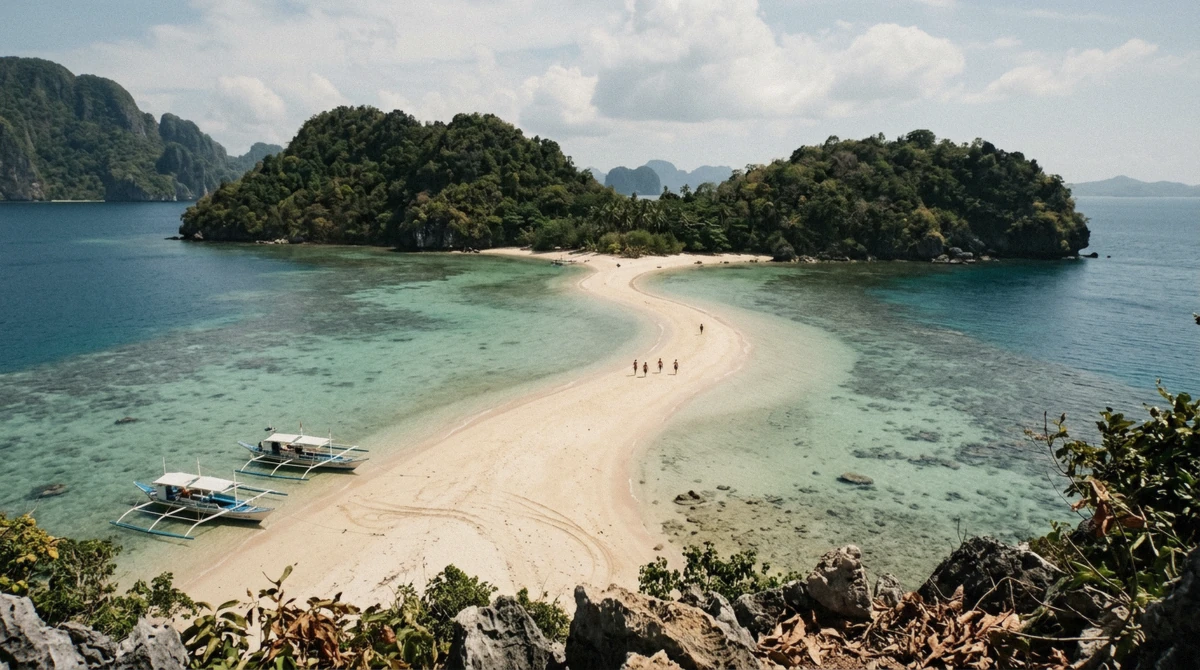
Timing the Day, and the Trip
Best Time of Day on the Water
Mornings, and not by a small margin. The whole fleet leaves the town beach between 08:30 and 09:00 because the sea is flattest before the day heats up and the afternoon breeze fills in. By three in the afternoon Bacuit Bay is choppier than it was at nine, every single day of the year.
The crowd effect runs the other way. Boats all hit their first stop at the same time, so the earliest departure you can get, or a charter leaving at 07:30, is what separates an empty Big Lagoon from a queue. That is most of what a private boat sells, as the private charter guide sets out.
Sunrise is around 05:45 to 06:15 and sunset between 17:45 and 18:30 depending on the month, so a seven-hour tour puts you back on the beach with daylight to spare in every season.
What Happens When the Weather Turns
Cancellations here are called in the morning by the harbour master, not the operator, and they are not negotiable. What happens next depends on how you booked: operators either move you to a sheltered route, rebook you for the next day, or refund.
Booking online with free cancellation up to 24 hours out is worth more in the monsoon than any price difference between boats. It also lets you walk away the night before if the forecast turns, which paying cash on the beach does not.
The fix that works in every month is structural: three nights in El Nido, two boat days, one spare. Do not put a tour on the day you arrive or the day you fly out. Getting into town takes longer than people expect, which the route guide to El Nido covers.
Our Recommendation
Come in Late November or May If You Can
We would take a first week of December or a middle of May over Christmas week without hesitating. The water is close to as good, the town is calm, and the difference in what a boat day feels like with six other bangkas at the stop instead of eighteen is larger than any weather difference between those months.
Questions About When to Visit
What month is best to go to El Nido?
March or April for the calmest water and the most reliable boat schedule, or February for the same dry conditions with slightly cooler air and fewer holiday crowds. If you want good weather with far fewer people, take late November or May, the shoulder windows either side of the peak season. Avoid the Christmas to New Year fortnight and Holy Week unless you book everything weeks in advance.
What month is the rainy season in Palawan?
June through October, the southwest monsoon or habagat, with 230 to 285 millimetres of rain a month at the peak in July, August and September. Rainfall drops sharply in November and stays at 20 to 40 millimetres a month from January to April. Rain by itself rarely cancels a boat here: the wind that comes with the monsoon is what closes the open crossings.
Which is nicer, Coron or El Nido?
They sell different things. El Nido has the limestone lagoons of Bacuit Bay and four standardised boat routes covering around 45 islands. Coron has clearer water, the Japanese shipwrecks that make it a diving destination, and Kayangan Lake. Most people who see both prefer El Nido for scenery and Coron for what is under the surface. If you have the time, the three-day expedition between them is how you avoid choosing.
Which island in Palawan is the best?
Palawan is one long island with several bases rather than a set of islands you pick between. El Nido is the one for lagoon scenery and boat routes, Coron for wreck diving and lakes, Port Barton for a quieter version of El Nido, and Puerto Princesa for the underground river and the airport connections. For a first trip focused on island hopping, El Nido is the standard answer.
Can you island hop in El Nido during the rainy season?
Yes, most days. Tours A, B and D work sheltered water and run through most of the monsoon. Tour C crosses the open Tapiutan Strait and is the one cancelled when the wind is up, which from June to October happens often. Book with free cancellation, keep a spare day, and expect the menu of routes to be shorter rather than closed.
How far ahead should I book an El Nido tour?
From December to April, two or three days ahead for a morning departure, and a week or more over Christmas and Holy Week. From June to October you can usually book the evening before. Booking online any time of year buys free cancellation up to 24 hours out, which matters most exactly when the weather is least predictable.
Do I need a wetsuit in El Nido?
No. Sea temperature holds between 28 and 30°C all year, which is warm enough to spend a whole day in and out of the water without one. A rash guard is the useful layer here, and it is for the sun rather than the cold. Tours include a mask and a life jacket; nobody rents wetsuits because nobody needs them.