 El Nido Island Hopping Tours
What to Bring El Nido Island Hopping (and What to Wear)
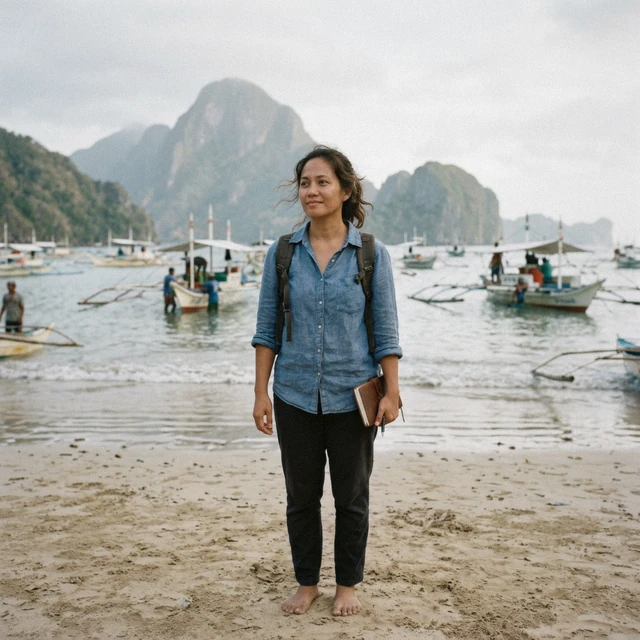
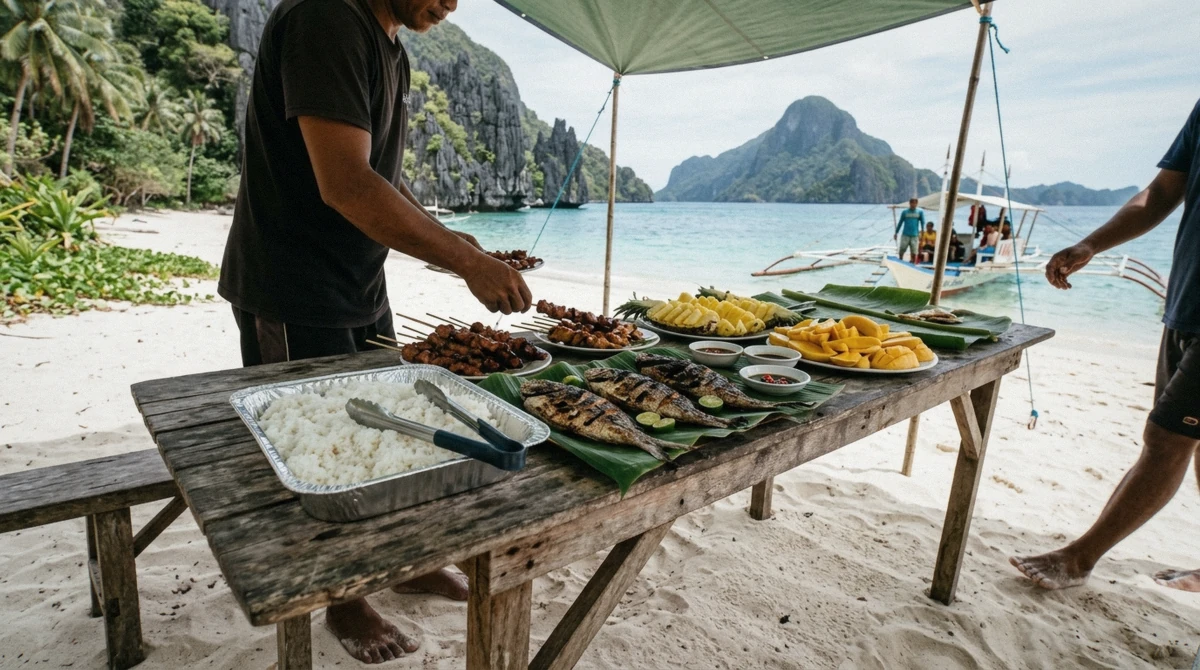
What to bring el nido island hopping is a shorter list than most packing guides suggest, because the boat already carries a lot of it. Every day tour includes a buffet lunch cooked on the beach, drinking water, a snorkel mask and a life jacket. What is left on you is sun protection, something to keep a phone dry, shoes that survive limestone, and more cash than you think, because every fee on the water is cash and none of it is in the ticket price.
Quick answer
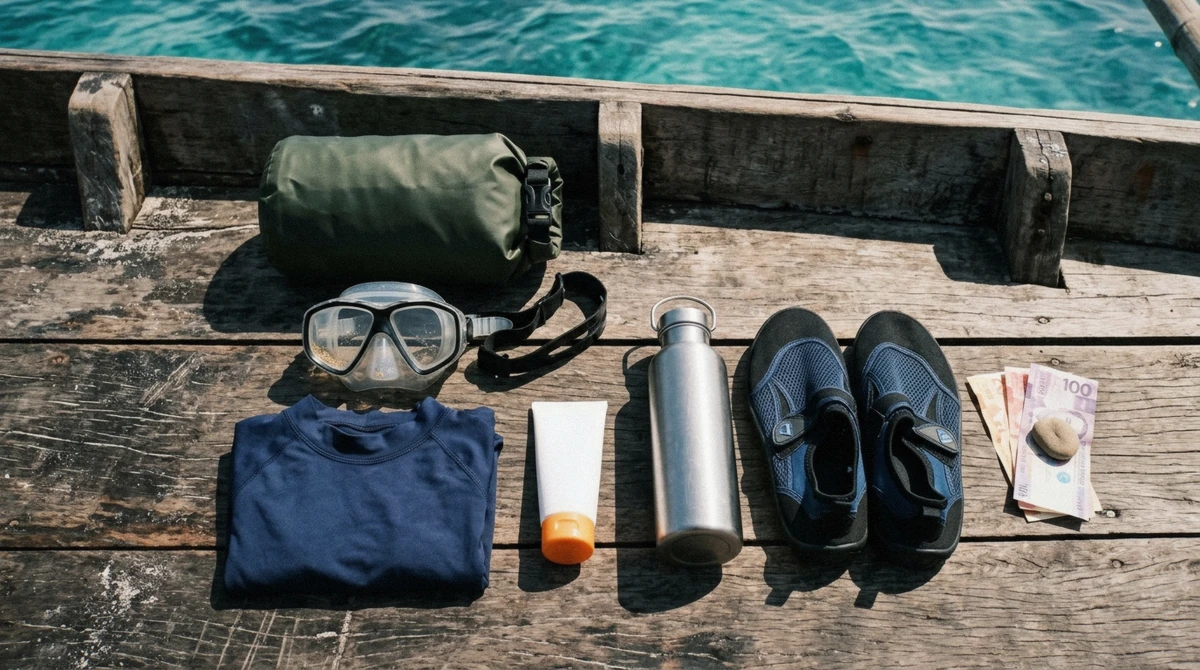
Bring a dry bag, reef-safe sunscreen, a rash guard, water shoes, a refillable bottle and about ₱1,000 to ₱1,500 in small notes. The tour already provides lunch, drinking water, a snorkel mask and a life jacket. Leave anything you would hate to lose on shore, because two or three stops on every route involve getting off the boat into water.
Key takeaways
- Cash is the item people get wrong: the ₱400 El Nido island hopping fees plus lagoon, kayak and shrine charges are all cash on the day
- No wetsuit needed. The sea holds 28 to 30°C every month of the year
- A dry bag matters more than anything else on the list. Bangkas have no covered storage and the bow takes spray
- Water shoes for the limestone: the Matinloc Shrine scramble takes skin off bare feet
- Single-use plastic bottles are banned across the protected area, so bring a refillable one
- Your own mask if you snorkel often. The shared ones are free and they leak
What the Boat Already Provides
Provided Against Bring Your Own
Last verified August 2026 against the inclusions published by the operators listed on this site. Inclusions are consistent across El Nido because the town standardises the routes and most crews cook the same lunch, but check your own booking before you rely on it.
| Item | Provided | Bring your own | Notes |
|---|---|---|---|
| Buffet lunch | Yes, every day tour | No | Grilled fish, pork, rice, salad and fruit, cooked on the beach |
| Drinking water | Yes | A refillable bottle | Single-use plastic bottles are banned in the protected area |
| Snorkel mask | Yes | Worth it if you snorkel often | Shared masks leak more often than not |
| Life jacket | Yes, and compulsory at some stops | No | Crews will not let you into Secret Beach without one |
| Fins | No | Yes, if you want them | Nobody rents them on the beach; most people manage without |
| Wetsuit | No | No | Sea temperature is 28 to 30°C all year |
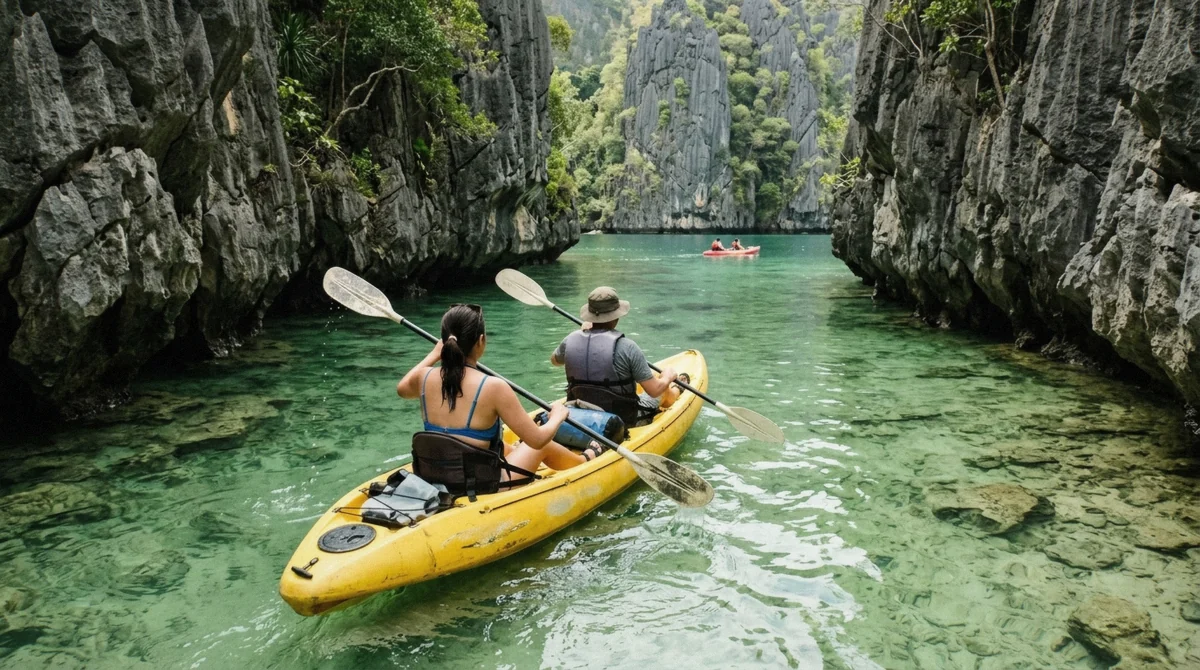
| Kayak | No, rented at the lagoon | No | About ₱300 per kayak, ₱600 on the two-lagoon route |
| Towel | No | Yes | Quick-dry, because nothing air-dries in a bag |
| Dry bag | No | Yes | The single most useful thing on this page |
The Packing List
What to Bring on the Boat
That is the whole list. Anything beyond it is either provided, banned, or something you will spend the day protecting from salt water instead of enjoying.
- Cash, ₱1,000 to ₱1,500 in ₱100 and ₱500 notes: the eco fee, lagoon entrances, kayaks, drinks
- A dry bag, 10 to 20 litres, for phone, wallet and camera
- Reef-safe sunscreen, applied before you leave the beach
- A refillable water bottle, because single-use plastic is banned here
- Water shoes or sturdy sandals for limestone landings and the shrine scramble
- A quick-dry towel and a change of clothes for the ride home
- Your own snorkel mask if you use one regularly
- Motion sickness tablets if crossings bother you, taken before boarding not during
- A power bank, since a full day out will flatten a phone used as a camera
The Cash Problem
This is the part that catches most first-timers. Nothing on the water takes a card, there is no signal at most stops, and El Nido has only a handful of ATMs that run dry over long weekends and holidays.
What you will be asked for in cash on a typical day: the ₱400 Eco-Tourism Development Fee if it is your first tour, roughly ₱200 at a lagoon entrance, about ₱300 per kayak, around ₱200 at the Matinloc Shrine on the western route, and ₱50 to ₱150 for anything the floating vendors sell at lunch.
Bring small notes. A ₱1,000 bill at a kayak stand on Matinloc Island is a problem for everyone involved, because the collectors rarely carry change. Draw what you need in Puerto Princesa or at the airport rather than assuming the town will cover you.
What Not to Bring
Jewellery is the other one. Salt water, sand and a day of getting in and out of a boat is how rings and earrings end up on the bottom of Bacuit Bay.
- Single-use plastic bottles, which are banned across the protected area and crews will ask you to decant
- Anything valuable you cannot afford to soak, because there is no lockable or covered storage on a bangka
- Regular chemical sunscreen with oxybenzone, which the reef stops here do not need
- Flip-flops as your only footwear: they slip on wet limestone and float away at swim stops
- A hard suitcase or a rigid camera case, since everything gets stacked under a tarp
- Drones, unless you have checked with the operator and the site: several stops do not allow them
What to Add for Your Trip
If You are doing the Big Lagoon or Small Lagoon route
More cash. Those two days carry a lagoon entrance and a kayak fee that the other routes do not.
If You snorkel regularly
Your own mask, and fins if you have space. Neither is rented on the beach and shared masks leak.
If You burn easily
A long-sleeved rash guard and a wide hat. Six to eight hours on open water beats any reapplication schedule.
If You get seasick
Tablets before boarding, and pick a sheltered route. The open crossing on the western route is the rough one.
If You are travelling with small children
A shaded layer, their own life jacket if you have one that fits, and a route that is back by mid-afternoon.
What to Wear, and What the Season Changes
On Your Body
Swimwear under light clothes is the standard, because you will be in and out of the water at three to five stops. A long-sleeved rash guard does more for you than sunscreen reapplied every ninety minutes on a moving boat, and it stays on while you snorkel.
A hat that will not blow off and sunglasses with a strap. Bangkas run open with a tarp roof, and everything unsecured on the deck of a boat crossing open water eventually goes over the side.
Footwear is where people get it wrong. Water shoes or sport sandals with a heel strap handle the limestone at lagoon landings, the rock at Hidden Beach and the scramble behind the shrine. Flip-flops are fine on the sand and useless everywhere else.
Dry Season Against Monsoon
The sea does not change much: 28 to 30°C all year, which is why nobody in El Nido rents wetsuits. Air temperature moves by three degrees across the whole calendar, 30 to 33°C, so the packing list barely shifts by season.
What changes is water and wind. From December to April you want more sun protection than you think, because March and April are the hottest months with the least breeze and the flattest water. That combination burns people who felt comfortable all morning.
From June to October, add a light waterproof layer and expect spray on the crossings. Rain here arrives in bursts and passes, so the layer is for comfort rather than staying dry. The month-by-month season guide covers which routes still run when the wind gets up.
Cameras, Phones and Salt
A phone in a dry bag is the setup most people end up with, and it works. What kills phones here is not a dramatic soaking but the slow one: salt spray on the deck, wet hands, and sand in the charging port after a beach lunch.
Floating wrist straps are worth the small cost if you plan to shoot in the water at the swim stops. Two of the stops on the western route have no landing at all, so anything you carry in is carried in your hand while you swim.
Action cameras handle Bacuit Bay better than phones do, and the light in the lagoons at nine in the morning is the best you will get. Rinse everything in fresh water at the end of the day, including the strap, because salt left to dry on a seal is what ruins housings.
Bring a power bank. A full boat day used as a camera flattens a phone by mid-afternoon, and there is no charging on a bangka.
Packing by Season
Last verified August 2026. The sea barely moves across the year, which is the reason no operator in El Nido rents wetsuits and nobody needs one.
| Season | Air | Sea | Add to the list |
|---|---|---|---|
| December to February | 30-31°C | 28-30°C | A light layer for the amihan breeze on the crossings |
| March to April | 32-33°C | 29-30°C | More sun protection than you think: hottest air, least wind |
| May and November | 31-33°C | 29-30°C | A packable rain layer for passing showers |
| June to October | 31-32°C | 28-29°C | Waterproof layer, dry bag with a roll-top, spare dry clothes |
Our Recommendation
Three Things, If You Only Sort Three
We have watched more people miss the Big Lagoon over a wallet with one ₱1,000 note in it than over anything to do with weather. Sort the cash before you sort the gear.
Questions About Packing
What should I pack for El Nido?
For the boat days: a dry bag, reef-safe sunscreen, a rash guard, water shoes, a refillable bottle, a quick-dry towel and ₱1,000 to ₱1,500 in small notes. For the town: light clothes, sandals and a power bank. Lunch, drinking water, a snorkel mask and a life jacket come with every tour, so there is no need to buy or rent snorkelling gear before you arrive.
What to bring on an island hopping tour?
Cash first, because every fee on the water is cash and there is no signal at the stops. Then a dry bag, since bangkas have no covered storage and the bow takes spray. Then sun protection you wear rather than reapply: a rash guard and a hat beat sunscreen on a six to eight hour day. Water shoes complete the list. Everything else is either provided or optional.
What to wear during island hopping in El Nido?
Swimwear under light clothes, a long-sleeved rash guard for the sun, a hat that stays on, and water shoes or sandals with a heel strap. Skip flip-flops as your only footwear: the limestone at the lagoon landings and the scramble at the Matinloc Shrine are sharp and often wet. No wetsuit is needed at any time of year.
Do El Nido tours provide snorkel gear?
Yes. A mask and a life jacket come with every day tour, along with a buffet lunch cooked on the beach and drinking water. Fins do not, and almost nobody rents them. If you snorkel regularly, bring your own mask: shared ones leak, and the reef at Helicopter Island on the Tour C route is worth not spending in a flooding mask.
How much cash should I bring for a day of island hopping?
₱1,000 to ₱1,500 per person on your first day, less afterwards. The ₱400 eco fee is paid once and covers ten days. After that it is roughly ₱200 for a lagoon entrance, about ₱300 per kayak, around ₱200 at the shrine, and ₱50 to ₱150 for drinks. Bring ₱100 and ₱500 notes: collectors on the water rarely have change.
Can I bring a drone on an El Nido island hopping tour?
Ask the operator before you pack it. Several sites in Bacuit Bay restrict drone use and crews will tell you where flying is not allowed. Even where it is permitted, a bangka with fifteen people on it is a difficult place to launch and land, and the boat rarely stops long enough to be worth it.
Is regular sunscreen allowed in El Nido?
Reef-safe sunscreen is what operators and site staff ask for at the reef and lagoon stops, and it is the right choice for water this shallow over live coral. A rash guard reduces how much you need in the first place. Single-use plastic bottles are separately banned across the protected area, so bring a refillable one for water.